Monday, March 14, 2011

How Schools Have Changed!

This is the sign on the wall in the Teaching Lab.
Jim Long
The Ozarks Herbalist
for The Ozarks Mountaineer

How Schools Have Changed!

I never thought of myself as an antique. Nor have I felt like I grew up in the old days like my parents and grandparents once talked about. But I have come to realize I am from a distant age, from a time when, as my Granddad said, “things were different.”

For the first three years of my schooling I attended a one room school. We had wooden school desks, an old cork bulletin board and a coat room with a shelf where everyone kept their lunch buckets. In the coat room was an enamel bucket of water and a dipper. At recess one of the seventh or eighth graders would pump a fresh bucket of water from the old iron pump in the school yard and everyone would have a drink, all from the same dipper.

Schools have changed and I have no complaints. I’m grateful for my fond childhood memories, and my experiences were humbling, but I would not wish such a school upon children today. Today’s kids have a vast universe of opportunities beyond our wildest dreams in the old days.
Front of the Jonesboro school.

Recently I was asked to do some consulting for a grade school in Jonesboro, Arkansas to establish an herb garden at the school. In past years I’ve visited several school garden projects in other states including ones in Philadelphia, San Antonio, Cincinnati and last summer one in Dallas (If you follow my garden blog, you likely have read of some of the schools already). Each one was slightly different, but all focused on teaching children where their food comes, including utilizing what they grow into the school lunch programs.
This is the outdoor demonstration area with some of the smaller garden beds in the background.

This is part of a much larger movement in America to encourage people to eat better. Gone (or at least going) are the days when school lunches are nothing but a slice of pizza and a plate full of frozen, greasy, heated up ‘tater tots. This movement began with the food activist, Alice Waters, who is the proprietress of the famous Chez Panisse restaurant in California, and Carlo Petrini the founder of the Slow Food movement in Italy, which he established in 1986. Both of those people believe food should be the freshest and most healthy, grown from local sources. That includes food grown without pesticides or growth hormones, and that the most vulnerable people, meaning children and the elderly, should have access to those healthy foods.

Sow Foods is not simply a two-country movement, either. I was a delegate and lecturer at the first International Slow Foods Conference in Turin, Italy in 2005 and was astounded and encouraged to find five thousand attendees representing one hundred thirty countries. This is an international movement to encourage local, healthy foods. It includes an emphasis on using local food producers first, meaning supporting local farmers over imported foods. Since that time, Slow Foods groups have grown up all over the United States and in many other countries.
One of the enclosed courtyards. Notice the little greenhouse in the back and the raised vegetable beds.

School adminstrators have come to realize the connection between what children eat, and the roly-poly creatures they often become when fed primarily high fat, high sugar foods. To address that, school gardens offer opportunities to not only eat better, but to learn why an actual potato is healthier than a greasy, deep-fried french fry. Or why food, fresh from the garden has more vitamins and minerals and how it simply tastes better.

The Health, Wellness and Environmental magnate school in the Jonesboro, Arkansas school system is an exceptional school. Melinda Smith is the Program Coordinator who writes grants, helps with curricula, teaches classes and has established and oversees the kids’ garden project. She has a staff of enthusiastic, very talented teachers who work with her and who use the gardens to teach a variety of subjects and lessons.
Even the school lunchroom is upbeat and cheery.

The gardens were established only two years ago but in that short time they have utilized two existing enclosed courtyards in which they have built raised beds, an outdoor workshop with tables for demonstrations and an indoor kitchen teaching lab that is more impressive than many small restaurant kitchens.

They have a small greenhouse where the children, grades one through six, learn about starting seed, transplanting, potting and growing plants for their garden. In the spring of the year they have an annual plant sale with the proceeds going back into the garden. Equally as important are the classes taught in the kitchen where the children learn how to clean, prepare and cook the produce they grow.
The gardens are great for teaching geometry, math, science and reading.

Does this mean the school has given up classes in reading, writing and arithmetic? Absolutely not! Science classes include things like soil fertility, water and air quality, how to measure length and depth of the beds, all involving math, science and reading skills. Each class teaches the basics and includes information about the environment along with information about the world at large in the classes.
Melinda Smith, Project Coordinator.

Even though Jonesboro is a community with many forward thinking people, the school has had to combat ongoing questions from people who don’t quite understand yet the reasons for the unusual curriculum. Questions like, “What’s wrong with instant potatoes and canned green beans and pizza for lunch every day?” Or, “Why do children need to know where their food comes from, we’ve got Wal-Mart!” is a constant challenge.
This is part of the Teaching Lab and kitchen.

When you look at this from the perspective of an international movement, the school kids’ gardens begin to make sense. I have been hosting summer garden interns at my farm for the past fifteen years, usually men or women in their twenties to early thirties and these are the folks who are knee-deep in the compost and mulch of this healthy foods movement. It is the college-age people and the young married people who are raising families who care about organic produce, about eating food grown in their neighborhood instead of shipped from a third-world country. They are the ones who believe food is what makes our bodies work, and that if you want a child to grow up healthier than our current generation, the way to do that is to teach them how to choose healthy food and know where it comes from.
The kids learn about chickens and eggs and how to be responsible for animals. Math and science classes include the chickens (and rabbits) in class lessons.

If a disaster struck, like widespread drought, or the price of oil rose so high international shipping was affected, if social upheaval or disastrous earthquakes caused food shortages, wouldn’t it be an advantage if there was a generation of young people who know how to grow food? Instead of depending upon stores for food, earlier generations grew their own, saving money in the process as well as supporting themselves with fresh, healthy food.
The kids learn about why you wash vegetables, lessons about bacteria, as well as what you do to vegetable before it's ready to be eaten.

Some years ago I hosted three generations of one family from New Jersey who toured my garden. I had a large bed of mixed lettuces growing in one area and the grandmother of the group asked me, “What is that?” pointing toward the salad greens. I mistakenly thought she was pointing to something I hadn’t yet seen, a bug, a bird something hidden in the raised bed. She asked me again and I realized she meant the rows of lettuce. It’s lettuce, I told her.

“So do you eat it like the lettuce from the grocery store?” she asked.

I was dumbstruck and could only nod yes, mystified at how you could reach her age and not understand that anyone could grow their own salad greens. I’m sure she would never see the value of knowing where food comes from but thankfully, younger generations do.
The Health, Wellness and Nutrition magnet school also teaches kids about recycling. This 5 ft. tall "robot" is made completely from plastic jugs and bottles and was made by one of the 4th or 5th graders.

The school garden project in Jonesboro includes a tiny chicken house where the kids learn about eggs and caring for animals. There are two formerly homeless domestic rabbits that someone donated to the school, named Oreo and Leon who live in one of the enclosed courtyards.
There are some really amazing new books available for teaching math, science and reading schools through the use of gardens.

Because kids might not quite grasp the concept of an “herb garden” we have created a “pizza garden” which includes all of the herbs and vegetables you might put on a pizza, including oregano, marjoram, onions, rosemary, garlic, basil, tomatoes and summer squash.

New this year, as well, is a “salad bar” garden, complete with a sign, where the children are growing a variety of lettuces, spinach, cucumbers, cherry tomatoes, green onions and radishes. Those vegetables will go into the classroom teaching lab and be washed and prepared and the children will eat them, probably with a well-made, fresh pizza they have made, as well.
Oreo and Leon are the two resident rabbits who live in one of the courtyard gardens.

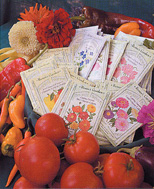
Renee Shepherd, who is owner of Renee’s Garden Seed in California, has a very generous project this year for nonprofit organizations anywhere in the U.S. The Jonesboro school is participating in the project (as is my own company, Long Creek Herbs). Renee assigns a coupon code for each nonprofit organization that participates and anyone who orders seed from Renees Garden Seed and uses the coupon code, will be making a donation to that garden. That means if you go to the school’s garden blog you can get the coupon code, click on the link to reneesgarden.com and order packets of seed (anytime until the end of this year). At the end of the year, Renee tallies how many dollars worth of seed has been ordered using that coupon code, and she donates 25% of that money back to the garden project.

If you go to my website, LongCreekHerbs.com, and click on the “Buy Seed, Help Children” button on my home page, it will take you to a page with a complete explanation of the project, and you will see the coupon code (FR556A). Then go to reneesgarden.com and order seed using that coupon code, and you will be making a contribution to the school garden project. I have used Renee’s seed collections for many years and always appreciate the varieties and selections she offers.
The science lab includes birds, lizards, snakes and lots more. The classroom is exciting and encourages the kids to learn and explore. Think how much more exciting and fun homework and classwork, too, would have been when we were kids if we'd had classrooms and teachers like these!

I’m very happy at the ways schools are changing. When I visit the Jonesboro Health, Wellness and Environmental school, I am completely encouraged and inspired. It makes me want to go back to school and start all over! Those kids will never know a water bucket and a communal water dipper, thank goodness, but what they will have instead, are excellent skills in math, science and reading that will guide them throughout their lives. They have opportunities to go forward with their lives with more information and opportunities than many of us had at their age, with a better understanding of food and how it affects their health than their parents had.

You can follow my gardening adventures and my visits to other gardens at jimlongsgarden.blogspot.com. To follow this unique kids’ garden project at the Jonesboro school: schoolgardentokitchenprogram.blogspot.com. I think you will be as pleased for these kids and their dedicated teachers as I am.

Sunday, February 20, 2011

Pruning Grapes, Sage, Muscadines

Ozarks Gardening Feb 16, 2011
Jim Long

Garden Fever

It may not feel like it with all the deep freeze cold and snow we’ve had, but it’s garden planning time. Mid-February to mid-March is the best time to plant peas, onions and potatoes if you want the best growth and the fewest insect problems. Ozarks tradition dictates peas be planted by Valentine’s Day, but I didn’t accomplish it this year. My garden was still under several inches of snow that day. Next week will be soon enough.

Potatoes, as I’ve mentioned in this column every winter for almost two decades, will tolerate a lot of cold in the spring. The earlier they are planted, the better you will avoid potato beetles. Onions too, benefit from early planting.

February is also the ultimate month for pruning grapevines and muscadines. Why so early? Because as soon as the daytime temperatures start easing upward, the sap rises in grapevines. If you wait too long to prune, the vines will “bleed” sap, sometimes gallons a day, for a week or more. Early pruning while the weather is still cold will prevent that.

This is also the month to prune back sage and lavender plants. Both herbs should be if cut back by two thirds in early spring before new growth begins to prevent die-out of the center of the plants. Hard pruning also encourages more vigorous growth and blooming.

Getting rid of garden debris such as last year’s old tomato plants, cornstalks and squash vines is good to get done now, as well. Last year’s pests have over wintered in the garden debris, so take them off of the garden space and burn or compost them. If you can till up the soil now it will help expose some of the Japanese beetle grubs, squash bugs and other pests that will soon awaken and start gnawing away at your produce.

I scatter my first planting of lettuce and radishes at the end of February, with additional seeding every two or three weeks. That way I have a continuous supply of salad greens and when planting early, the pests aren’t a problem, either.

You can find links to past columns, photos and previous Ozarks Gardening columns from this newspaper at my on-line blog (a blog is a web diary): jimlongsgarden.blogspot.com. Happy gardening.

Pruning Sage, grapes, lavender


Ozarks Gardening
Jim Long

February is the Month to Prune

It was warm on Saturday and I felt the need to be in the garden, even if for a short while. Sunshine in the garden is always healing to me, and with Valentine’s Day coming up, I wanted to observe that long standing Ozarks tradition by getting my peas planted before February 14.

With the potato fork, I dug a row at the base of the cattle panel where I had Missouri Wonder beans last summer. I emptied the peas into a can with some water to get the seed wet, poured the water off and put in a tablespoon of compost and jiggled the can to coat the seed. This works as well as buying the seed inoculant the seed companies recommend, and either one improves the germination. Then I planted a double row of peas, one on either side of the cattle panel. This particular variety, “Mr. Big” is much like Mr. Lincoln in that the vines get about four feet tall and need some support. Next I will plant Laxton’s Progress and Wando, two old favorites.

I turned my attention to the grapes, which are trained on an overhead arbor near my herb shop. The main trunks of the grapes are about seven feet high and I cut the vines back to those main trunks each year. February is the time to trim grapes, and with a pair of Fiskars loppers it only took me about ten minutes to do that job.


This is the month, also, to prune sage, lavender, green and gray santolina (sometimes mistakenly called “lavender cotton”) and winter savory. I could prune all of those plants while sitting on the edge of the raised bed.

I stuck a yard stick in the garden sage and photographed it and the pruning process is posted on my garden blog. The sage plants were twenty four inches tall and I pruned them back to seven inches. Lots of new growth is coming up at the base and by pruning the plants each spring, they never die out in the center like they do if left unpruned.

The lavender plants got the same treatment. I also posted a photo of the pruning of those on the blog, as I get lots of questions from readers about just how far to cut these plants back. Generally people are too timid in their pruning and wind up cutting an inch or two from the ends of the limbs, which is not nearly enough. If you look at the photos on the garden blog, you will see the lavender plants started off being nineteen inches tall. I cut everything  down to the newly emerging growth. The photo shows the newly pruned lavender has been cut back to seven inches tall, the same as the sage.

Then I trimmed back the rest of the sage and lavender plants and had just enough energy left to prune the winter savory. It clings to the edge of the rock wall where my herbs grow and it, also, was about nineteen inches tall. When I finished pruning, it was down to just five inches in height.

Now as the days begin to warm and lengthen, these newly pruned plants will put out new growth and in summer they will bloom well. In a few weeks I will scatter some compost and about one half cup of lime around each plant, being careful to not dig it into the soil as the roots of all of these are near the surface and easily damaged. That’s all the care they need for this year except to sit back and watch them grow. But I’d used up my energy and had to take a nap.

If you want to see the photos of how these plants are pruned, go to this address on the internet: http://jimlongsgarden.blogspot.com/.  Questions and comments are always welcome by contacting me at LongCreekHerbs.com. Happy gardening!

Saturday, February 12, 2011

Indoor Plants


Here's what the garden looks like today (above). And  yesterday. And the day before. All week it's been frozen. It all looks pretty bleak.
Some of the plants I'm growing: Allspice, Cinnamon, Kaffir Lime, Curry Tree and others.

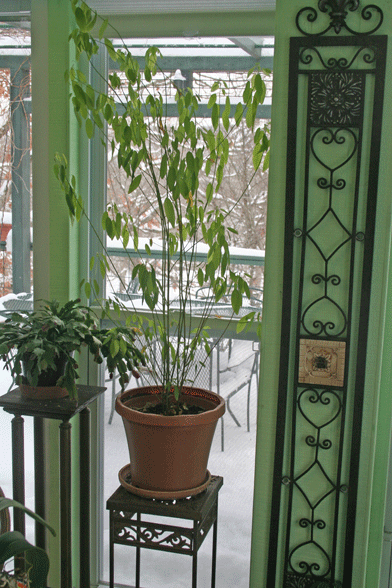
But if I step back just a few feet from that view, here's what I can see, so I thought I'd write about some of the indoor plants I grow. I'm working on my Keynote presentation on Cutting Edge Plants that I'll be presenting to the Michigan Herb Associates conference in Michigan next month and will use some of the photos of the plants you see here.
Dancing Tea Plant (Codariocalys motorius X Ohashi leguminosae)
Some of the plants I grow are rather hard to come by, such as the Udorn Dancing Tea, above. This plant is known for its ability to move when sound is nearby. If you search YouTube for the words, "Dancing Tea" you'll find videos of a dancing tea with a radio nearby playing music. The top leaflets of the plant, "dance" in motion with music (or speaking). It's a medicinal tea plant from Thailand and is not the happiest of plants indoors but so far is hanging on. It likes part shade in the herb bed in summer. You can watch the video here.

This is an unusual bush variety of Piper nigrum from Thailand. Most black peppers are vines.
The black pepper plant has pepper berries about to start ripening. Yes, the same peppercorns you use when you sprinkle black pepper on your breakfast eggs.
True Curry Tree (Murraya koenigii) is used in Indian cooking and usually fried in hot oil.
I learned to appreciate the curry tree when I was in India a few years ago. It's essential to many Indian dishes.

Leaves of Kaffir Lime (Citrus hystrix) are used in cooking.
Kaffir lime isn't especially rare but it's also not a common houseplant. It will accept regular pruning and you can freeze the leaves for use later, although the fresh ones are best. I learned to use kaffir lime leaves in both cooked and uncooked dishes when at the Bopai Cooking School in Bangkok.
Allspice and Lemon Bay Rum
The allspice and bay rum will grow into small trees, about the size of a small redbud tree or a large lilac bush but I keep mine pruned to indoor size. In the summer they go outdoors on the deck. I like to crush the leaves and season dishes, especially desserts or whipped cream.
Culantro (Eryngium foetidum), also known as Vietnamese Coriander
You'll find the leaves of culantro next to a dish of pho in a Vietnamese restaurant. The plant is native to the Americas but it has found its way into many Asian countries' cuisines. It requires constant moisture from underneath and heavy shade. It's a biennial and you can see the seed clusters at the top so I'll save seed and replant. If you like cilantro, you will also like culantro, and like cilantro, is used fresh, not cooked.

There are quite a few more plants in another plant window, cinnamon, Okinawa spinach, lemongrass, and others, but you might find these interesting:
 I brought this Pin Cushion Plant (Nertera granadensi) back from Florida.
Money Tree (Pachira aquatica), once the source of paper for currency in Asian countries.
Every time I write about tropical or indoor plants in my newspaper columns I receive questions about keeping them insect free. Here's what I use, which is a kind of super fine oil spray. I take my plants outdoors about once a month and spray them all, stems, leaves, tops of soil and edges of plants, with the oil spray at the rate recommended on the label. The oil isn't toxic to humans or pets, is approved for organic uses, and simply smothers the insects and their eggs, including: white fly, scale insect, red spider and mealy bugs.
It's only available in quarts and will make about 12 gallons of spray (as I recall). There are 2 mail order sources that I know of: http://www.pestproducts.com/ultrafine.htm and Green Island Distributors.

Nearly all of my plants are seasoning or food plants, although the Money Tree and Pincushion Plants aren't. Here's one more, that as far as I know isn't edible, although it does eat other things itself, like flies and gnats.
This is in the Nepenthaceae plant family. The little pitchers should be kept half full of water to help attract insects.
So while the snow melts, I'm looking indoors at the greenery and life that will eventually move outdoors. I'm glad there are people who like snow and winter. White has never been a favorite color and falling down and sliding down the driveway on my backside has never been a favorite activity, either. Happy gardening!

Tuesday, February 1, 2011

Renee's Garden Fundraiser Project

Ozarks Gardening
Jim Long

Renee Shepherd of Renee’s Gardens told me this week she’s started a new seed project aimed at school gardens and other nonprofit groups. It’s a really great idea and I thought some of our readers might be interested.

Around the U.S. there are many schools that have added school garden projects, specifically in grades K-6. Schools are being pressured by parents and interested groups to change the school lunch programs in an effort to fight obesity. The schools are trying to offer healthier meals that aren’t deep fried junk food, but that include fresh fruit and vegetables.

I recently ran across a Magnate School in Jonesboro, Arkansas that has raised beds in which the children grow a variety of vegetables. (The school’s focus is health and nutrition). In a dozen 3 by 10 feet beds the children are growing lettuce, radishes, tomatoes, squashes, herbs and lots more. There are additional raised beds, as well and the school has a teaching kitchen with work tables and stove, sink and refrigerator, where each of the six grades learn about preparing what they grow.

This new project of Renee’s is meant to support schools like the one in Jonesboro as well as other nonprofit groups around the nation. What she offers is this: go to her website and click on this link: reneesgarden.com/fundraiser.html and sign up your organization for the fundraising project. You’ll receive a very brief form asking the name and purpose of your nonprofit organization, and who will be responsible.

Once you have signed up, you’ll receive your own coupon code for the organization, along with a press release you can use to advertise your project. Your organization refers your members, or the public, to Renee’s website. Your organization then receives 25% of the price of all of the seed ordered using that coupon code. (What a deal! You’re going to order seed anyway, why not use your purchase to support your own organization’s fundraiser?)

This is a year around fundraiser so you can promote it in your organizations’ newsletters throughout the year. If you have not visited reneesgarden.com before, check out her seed varieties. I especially like her selections. She does something that most seed companies fail to do, which is offering mixtures of seed. For example, she includes yellow, white and green bush squash together in one packet. Radishes include several colors in one package; lettuces can be ordered as individual varieties or several in one packet. I’ve used her seed for years and highly recommend her offerings. And this new fundraiser program is a great idea for just about any kind of nonprofit organization wanting to raise money for their group.


Here is the information from Renee's Seed:
Fax to: 831-335-7227
Email to: customerservice@reneesgarden.com (put "Fundraiser" in the subject line)
Mail to:
Fundraising Program
6060A Graham Hill Rd.
Felton, CA 95018

Friday, December 17, 2010

School Gardens

This year I’ve enjoyed opportunities for visiting school garden projects in other states. I’ve been impressed at the creativity and insight some of the schools have demonstrated. One in particular stands out of those I’ve toured recently.


Stonewall Jackson Elementary in Dallas has a 20,000 sq. ft. science lab, which includes vegetable and herb gardens, a large (and impressive) compost area, greenhouse, small chicken house, nature area and 35 class rows for food and fiber crops. All students plant vegetables, harvest, study insect populations, prepare the soil and compost and learn how to make landscape plans. The school takes a hands-on approach to teaching their students about science, as well as math, art and writing through the garden project. Imagine, in the middle of Dallas, students are learning where their food comes from and how it’s grown. (What these students grow, also ends up in the cafeteria, where the students can take pride in knowing they have a vested interest in the flavor and quality of their daily lunches).

This is just a portion of the compost area. The "crowd" is a busload of Garden Writers of America members.

Contrast that with schools that teach only reading, math and sports. My own grandson, when he was here for a visit at age 7, helped “pick” eggs from the hen house. But the look on his face when his mother broke one of the eggs into a skillet, showed he had no idea that chickens produced that flattened, fried thing he had for breakfast every day.


I visited a school in Cincinnati where students have plots of ground at the Cincinnati Botanic Garden. They work in teams of 8 students per 10 x 15 ft. plot. Each team is responsible for amending and tilling the soil, making a budget, planning and planting, tending and harvesting. A chef from a local restaurant set up a project for the garden that teaches the students about turning their produce into salsa, made in the commercial kitchen on the grounds of the Botanic Garden. The salsa is then offered for sale through the Garden’s gift shop. Those students learn not only how to grow and prepare the produce, but also how to calculate production costs, advertising, food safety, how to run a business as well as how to work responsibly in a team.

Students at Stonewall learn about planting seed and caring for them before transplant.

I see this as an encouraging trend in school curricula. As more and more schools look at connecting their students with real food (I don’t consider ‘tater nuggets and a hunk of breaded, frozen then deep-fried nameless meat patty to be “real” food for children’s brains) I believe children will have healthier meals and a deep respect for the food they eat. Call me old fashioned, but I believe children learn valuable life lessons about respect, food and life in general by working with plants and soil.

You can just barely see it, but the chicken house and laying nests are just beyond the tree in the foreground.
It’s easy to sign up to follow Ozarks Gardening blog, simply click the “Follow” button on the blog and you’ll be notified every time a column is posted there (and no, you will not receive ads or emails, either. It's a free service and you won't miss any columns that way). Happy gardening!

Tuesday, November 30, 2010

Wasted Pumpkins, Wasted Food

Ozarks Gardening
Jim Long

Wasted Food for the Holidays


I’ve been wondering lately if ours is really the only country in the world that has so much food we can afford to throw it away. It came to mind right after Halloween when I saw large numbers of pumpkins thrown in ditches along the roadsides. And more pumpkins stacked beside garbage bins in front of houses, waiting to be carted away to the landfills.

For Thanksgiving I’d planned to stuff and bake a pumpkin. My recipe calls for a 3 pound pumpkin, top cut off like a jack-o-lantern and the innards removed. Into that go 3 cups of bread cubes, 4 ounces of cheddar cheese cubes, 2 finely chopped garlic cloves, 4 strips cooked bacon, crumbled, a diced green onion, 1 tablespoon chopped fresh thyme (I like orange thyme), 1/3 cup heavy cream and a tiny pinch of nutmeg. Mix all that together in the pumpkin, put the lid on and bake it for about 90 minutes at 325 degrees F. When the pumpkin is tender, remove it from the oven and let it set for about 15 minutes to cool. Just before serving, mix some of the pumpkin with the stuffing. It’s great.

But guess what? There were no pumpkins to be had at any of the stores. When I inquired at the produce departments of some stores I was told they had trashed their left over pumpkins after Halloween. One of them said, “People don’t think of pumpkins as food, just decoration so we throw them in the dumpster to make room for other things.”

I can’t imagine not recognizing pumpkins and squashes as food. Nor can I imagine throwing away crates of pumpkins to be sent to the landfill. Hogs eat pumpkins. They can be put in the compost where they become more soil. Even people eat pumpkins!

We’re fortunate we have such bounty that we can be wasteful. I was brought up to believe it’s wrong, even immoral, to waste food. Evidently I’m in the minority. It just seems like there should be a better solution. Maybe I’m just old fashioned.

This week in the garden we’ve planted radishes, lettuce and carrots in the cold frame. To see more of what’s happening in the garden each week visit my garden blog: jimlongsgarden.blogspot.com. Present and past Ozarks Gardening columns in this newspaper can be found at: ozarksgardening.blogspot.com. Happy gardening!